

For over 5 decades, Ward Transport & Logistics Corp. has been a trusted name in freight and logistics, operating across more than 20 terminals throughout the Eastern and Midwestern United States. Each day, thousands of shipments flow through Ward’s network, driven by a coordinated ecosystem of dockworkers, forklift operators, and supervisors who ensure precision, speed, and efficiency in freight movement.
Industry
Logistics & Transportation
Service
Application Re-platforming & Modernization
Tech Stack
Flutter, .NET Core, Azure SQL, Azure Functions, REST APIs
A decade ago, Ward’s warehouse operations were entirely manual. Freight movements, bay assignments, and shift schedules were recorded in paper ledgers, while forklift maintenance updates and dockworker tasks were communicated verbally or over calls. This fragmented approach made operations slow, error-prone, and heavily dependent on human coordination.
With the logistics industry transitioning toward Android and iOS ecosystems and Thor VM3 device deprecation creating additional constraints, Ward needed a future-ready, mobile-ubiquitous solution. The goal was to preserve existing functionality while enabling cross-platform scalability, hardware adaptability, and UI consistency from a unified technology foundation.
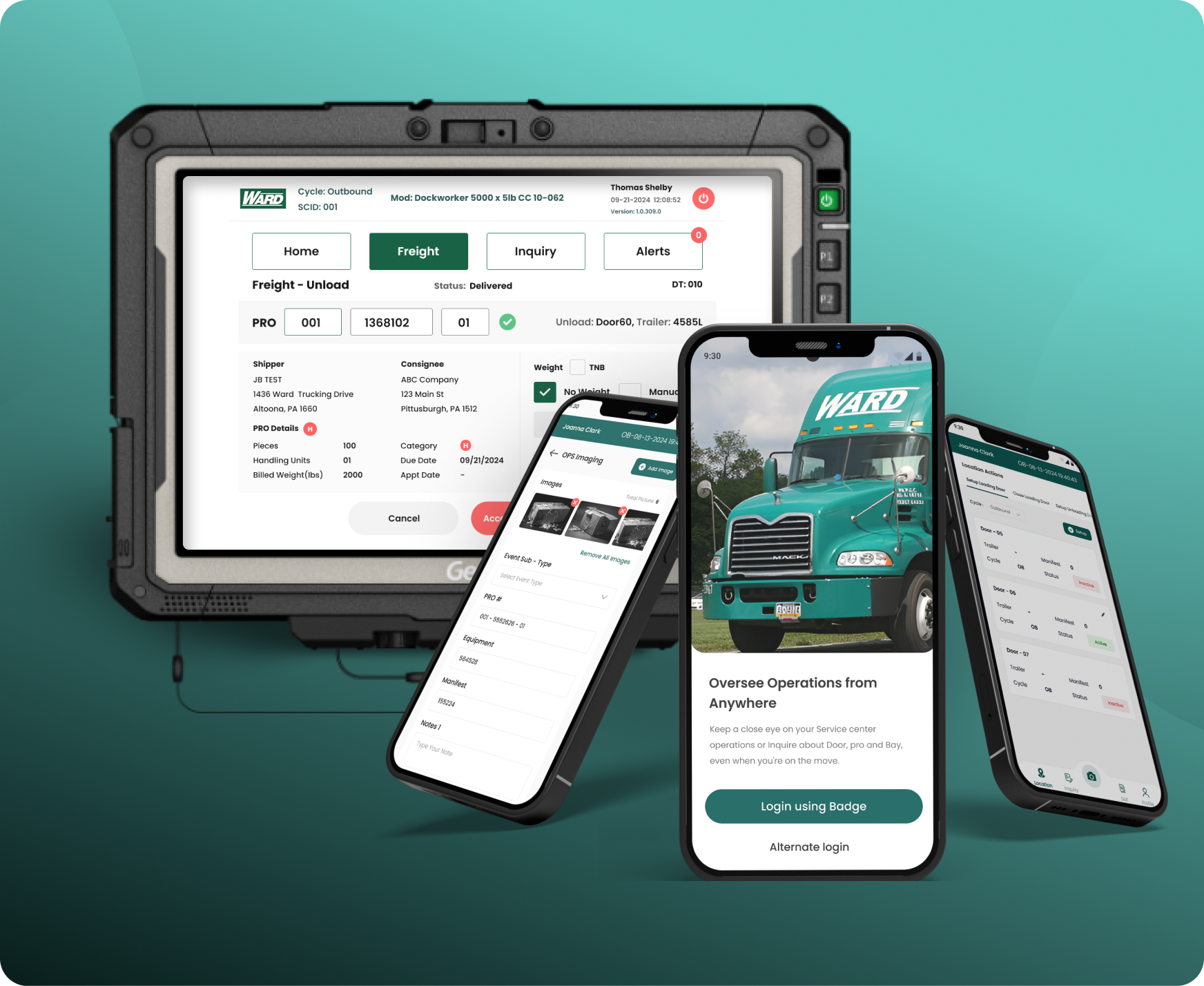
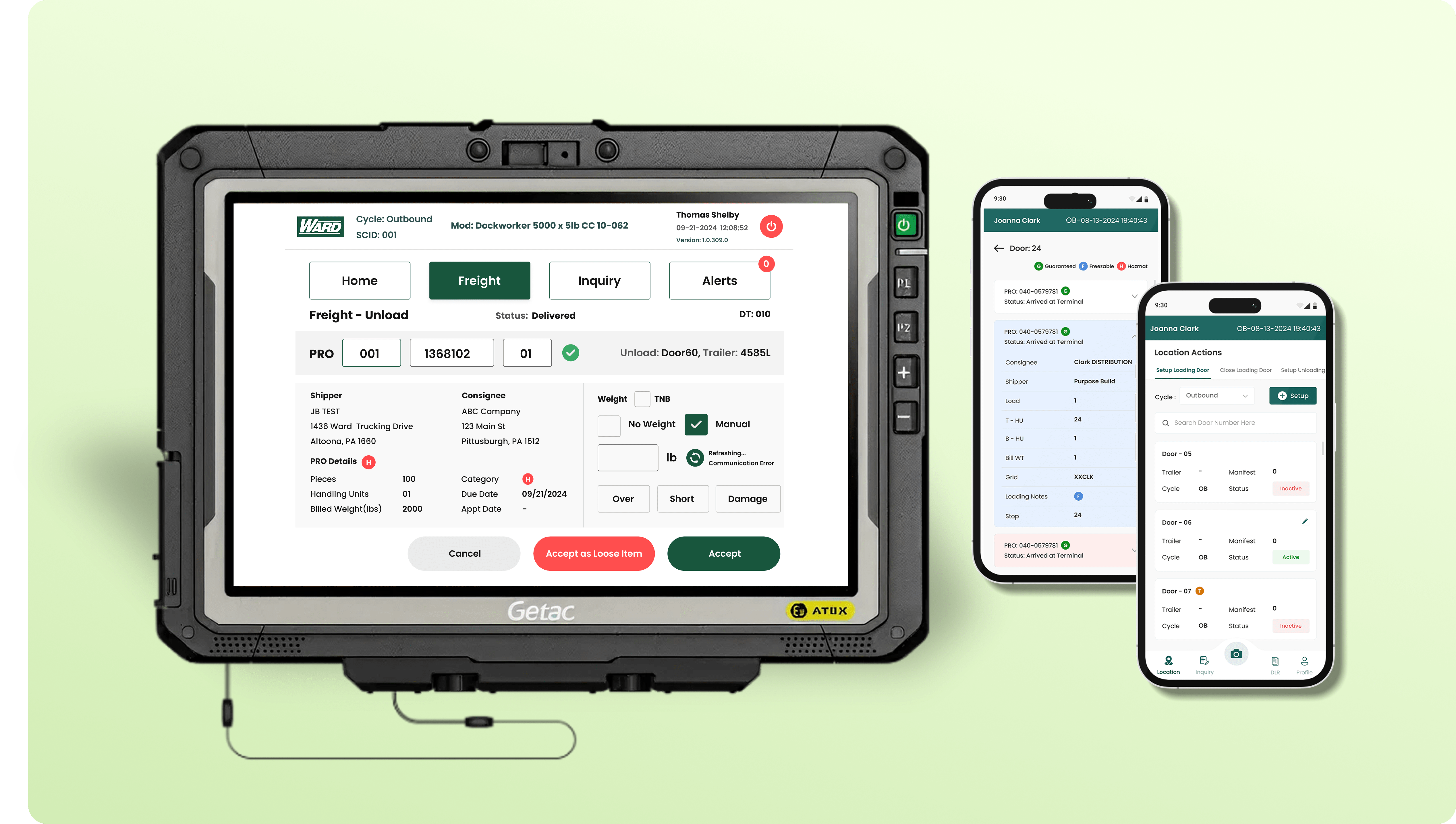
zeb modernized Ward’s warehouse system by rebuilding its legacy Universal Windows Platform (UWP) application into a cross-platform mobility solution powered by Flutter. The goal was to preserve existing functionality while enabling scalability across diverse devices and hardware used in different terminals.
Flutter was chosen for its ability to deliver a single codebase across multiple device types while supporting native-level integrations for warehouse-grade hardware. Unlike other frameworks that depend on platform-level rendering, Flutter paints its own UI, ensuring pixel-perfect consistency across devices, whether on Getac GX10, Honeywell tablets, or standard Android smartphones.
Key Advantages Implemented
Re-engineered Role-Based Application Suite
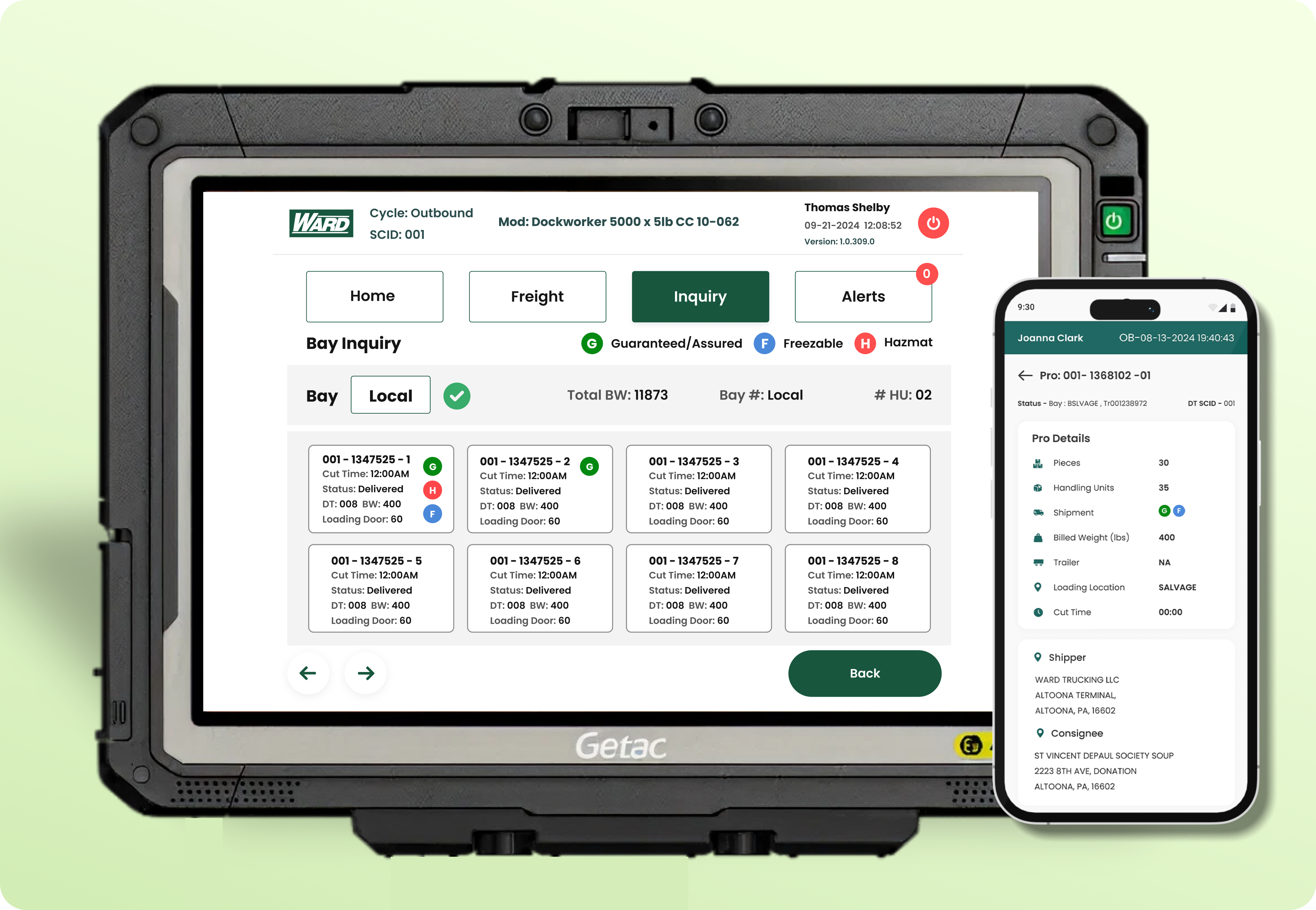
Our expert team restructured Ward’s operational workflows into two dedicated applications designed for specific roles but connected through a unified backend:
Design and Implementation Process
We conducted multiple UI walkthroughs and validation sessions with Ward’s operations team to refine layouts, task flows, and accessibility for real-world use. Flutter’s rendering engine ensured visual uniformity across devices, while its modular architecture enabled seamless peripheral integrations, allowing new scanners, scales, or sensors to be connected in the future without altering the application’s structure.
Through this modernization, zeb implemented a maintainable, hardware-agnostic, and integration-ready mobile ecosystem that unified Ward’s dockworker and supervisor operations under one scalable technology framework.
Ward Logistics now operates on a modern, unified mobile ecosystem that connects every role, location, and device type, eliminating operational silos and manual inefficiencies.
For dockworkers, automated scanning and weighing drastically reduced manual errors and increased throughput. Supervisors gained real-time visibility, enabling faster decision-making and seamless coordination across terminals.
Key Outcomes:
We integrated Zebra Scanner SDK, RAVAS Weight Service, and Flutter Scanner Package to form the automation backbone of Ward’s dockworker operations, ensuring precision and performance across every terminal.
zeb continues to partner with Ward Logistics, offering proactive maintenance and seamless hardware transitions, such as the migration from Thor VM3A to Getac GX10 devices. This ongoing collaboration ensures continued compatibility with emerging hardware and OS platforms, keeping Ward’s logistics operations agile and future-ready.
Through a strategic migration to Flutter, zeb transformed Ward Logistics from a Windows-dependent system into a mobile-first, cross-platform logistics ecosystem built for scale and flexibility.
By focusing on device optimization, workflow efficiency, and role-specific usability, we delivered a solution that redefined warehouse productivity and operational transparency. Today, Ward Logistics operates with speed, accuracy, and adaptability, powered by a hardware-agnostic, integration-resilient platform that grows with its expanding logistics network.

 +1 732 737 9188
 sales@zeb.co